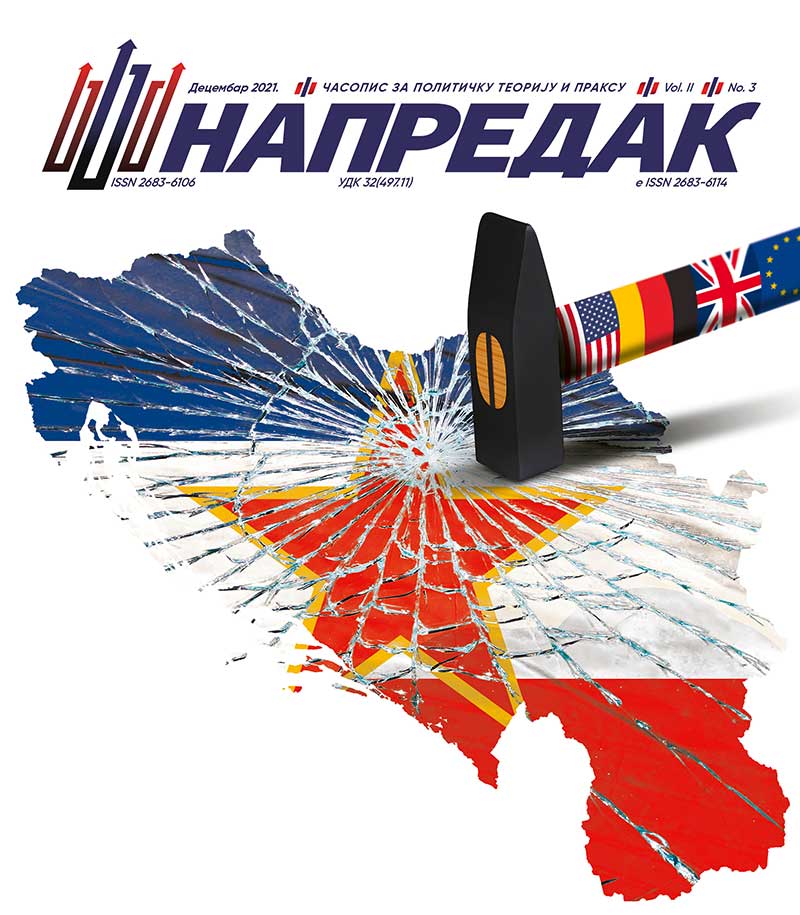
Значај антисрпске пропаганде и хибридног ратовања у процесу разбијања Југославије
Sažetak
У средишту рада је синтетизована слика пропагандно усклађеног и тоталитарног медијског
инжењеринга водећих западних држава током деведесетих година прошлог века, којим се сложена
југословенска стварност сводила на спиноване пропагандне слике о кривици само једне стране. Негативна перцепција о Србима постигнута је уоквиравањем пропагандних наратива, креираних снажном кампањом добро организованих и утицајних глобалних медија. Снажном стигматизацијом и демонизацијом у политичкој пракси они су жигосани као одговорни за све конфликте и ратове. Комбинујући различите методе и технике психолошко-пропагандних и оружаних активности оперативног или тактичког нивоа, западни стратези су значајан део ангажовања посветили гушењу алтернативних извора информација. То је укључивало и њихово физичко уништење, што је први пут у светској пракси реализовано НАТО бомбардовањем зграде Радио телевизије Србије и преко 300 релеја и репетитора. Југославија је постепено цепана по републичким шавовима, у складу с интересима промењене геополитичке архитектуре, док Срби нису довољно брзо разумели процес у којем се, уместо истине, преко глобалних медија распростиру манипулативне представе
о „новој стварности“.
Reference
Aracki, Z. (2010). The Transition of Media in the Era of Globalization. Belgrade: Institut za političke studije. [In Serbian]
Bagdikan, B. (1997). The Media Monopoly, 5th Edition, XIV–XVI. Boston: Beacon Press [In English]
Chaffee, Steven H. & Metzger, Miriam J. (2001). The end of mass communication?. Mass communication & society. 4 (4). [In English]
Clinton Rossiter & James Lare (eds.) (1963). The Essential Lippman, Random House, New York. [In English]
Despotović, Lj. i Jevtović, Z. (2010). Geopolitics and the Media.Novi Sad: Kultura polisa i Grafomarketing [In Serbian]
Fukujama, F. (1997). The End of History and the Last Man.Podgorica: CID [In Serbian]
Gabrielatos, C. & Baker, P. (2008). Fleeing, Sneaking, Flooding: A Corpus Analysis of Discursive Constructions of Refugees and Asylum Seekers in the UK Press, 1996-2005. Journal of English Linguistic. 36 (1), 5-38. [In English]
Galbraith, J. K. (1987). An Anatomy of PowerZagreb: Stvarnost [In Croatian]
Goebbels, J. (1934). Erkenntnis und Propaganda. Munichen: Zentralverlag der NSDAP [In German]
Hall. S. (2005). Culture, Media, Language: Working Papers in Cultural Studies, 1972-79. Routledge, Taylor & Francis e-Library, London. [In English]
Jevtović, Z. (2010). Totalitarianism and Mass Media. Belgrade: Krajinski književni krug i Bigz. [In Serbian]
Jevtović, Z. (2017). Media war against Serbs and Yugoslavia . In: Č. Antić (ed) Serbs and the collapse of Yugoslavia (63-92). Belgrade: Zavod za udžbenike i Službeni glasnik [In Serbian]
Jevtović, Z. i Bajić, P. (2019). Propaganda Campaigns in the Doctrine of Hybrid Warfare during the NATO Aggression . In: Ž. Đurić, M. Jevtić (eds)Twenty Years from the NATO Aggression against FRY – Causes and Consequences . Belgrade: Institut za političke studije [In Serbian]
Jevtović, Z., i Aracki, Z. (2019). The Propaganda Matrix of Global Media in Hybrid Warfare . Politika nacionalne bezbednosti, год. X, vol. 16, број 1/2019. Belgrade: Institut za političke studije [In Serbian]
Perse, M. E. (2008). Media Effects and Society. Taylor & Francis e-Library, London. [In English]
Shah, A. (2009). Media Conglomerates, Concentratиon of Ownershиp, Global Issues, www.globalissues.org/article/159/
media-conglomerates-mergers-concentration-of ownership [In English]
Stevens, M. (2003). Freedom of the Press, www.faculty.ncwc.edu/mstevens/410/410ect09.htm [In English]
Van Dijk, T. (1993). Elite Discourse and Racism. London: SAGE Publications INC [In English]
Vuković, S. (2008). The Friend-Enemy Paradigm: The Model of Anti-Serb Propaganda in the 1990s. Sociološki pregled, vol. XLII (3) Available at: http://www.socioloskipregled.org.rs/2017/08/15/socioloski-pregled-vol-xlii-jul-septembar-2008- no-3/ [In Serbian]
Vuković, S. (2011). The Destruction of the Second Yugoslavia: The Start of “Humanitarian” Interventions.In: Knežić, B. i Ćirić J. (eds.). 20 Years since the Destruction of Yugoslavia. Belgrade: Institut za uporedno pravo[In Serbian]
https://1997-2001.state.gov/policy_remarks/1998/980222_gelbard_pristina.html
http://www.kosovo.net/kla2b.html
https://fas.org/irp/world/para/docs/fr033199.htm
https://www.nytimes.com/1998/06/25/world/us-envoy-meets-kosovo-rebels-who-reject-truce-call.html
http://www.foreignpolicy.com/articles/2006/02/22/think_again_soft_power