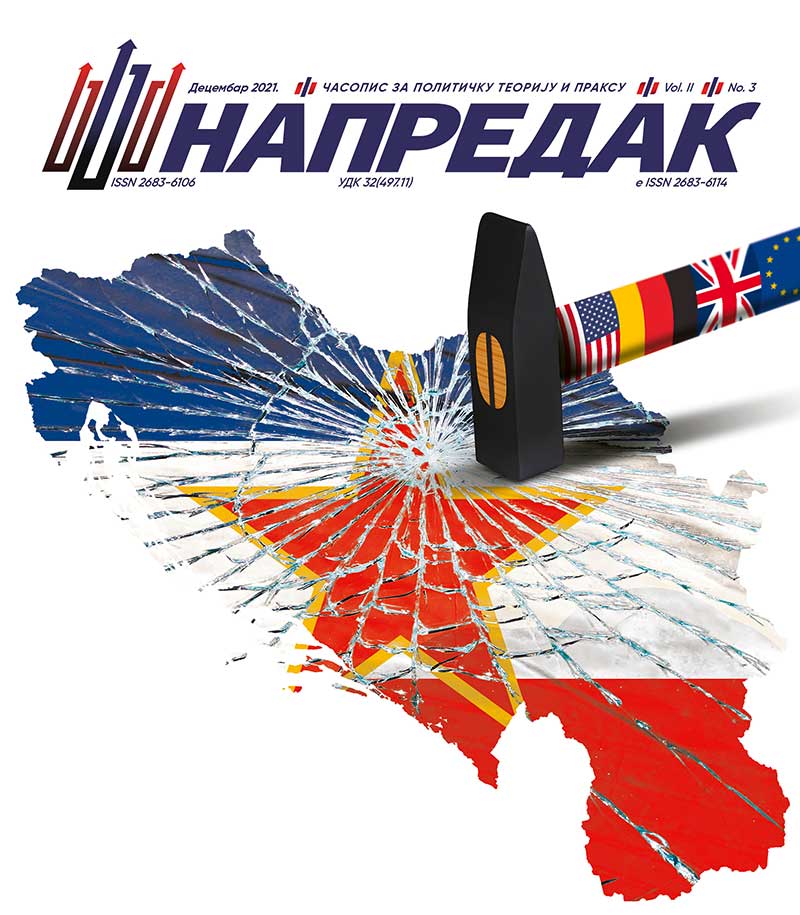
О разбијању Југославије
Sažetak
У овом раду се указује на развој СФРЈ, нарочито уочи и после усвајања Устава СФРЈ из фебруара
1974. године. Коментарише се и понашање српских руководилаца тог времена. Посебно се наглашава
и објашњава упражњавање термина „распад“ Југославије и његова неоснованост, јер многи догађаји
показују да је била реч о разбијању Југославије. Говори се о политичком и физичком уништавању једне
државе, која је била субјект међународних односа сходно Повељи Уједињених нација. Објашњава се коме је изгледало да корист од елиминисања Југославије припада сецесионистичким политикама. Указује се на улогу некадашње Европске заједнице и данашњег западног света. Нарочито има подсећања на тзв. Карингтонову конференцију. Помињу се имена и улоге појединих домаћих и страних политичких личности. Обрађена је и улога Немачке.
Reference
Akaši, J. (2013). In the valley between war and peace. Beograd: Evropski centar za mir i razvoj Univerziteta Ujedinjenih nacija [In Serbian]
Fukuyama, F. (2006). The end of history and the last man. New York: Free Press, Simon & Schuster. [In English]
Huntington, S. (1997). The Clash of civilizations and the remarking of world order. New York: Touchstone, Simon & Schuster. [In English]
SSIP-ŠIK. (1991). Open telegram no. 10083/1
Šišić, F. (1920). Documents on the creation of the Kingdom of the Serbs, Croats, and Slovenes, 1914–1919. Zagreb: Naklada „Matice Hrvatske“. [In Serbian]
Tuđman, F. (1970). A war against war. Zagreb: Zora. [In Croatian]
Internet sources / Интернет извори
https://www.icty.org/x/file/About/OTP/Milosevic%20Feature/High%20level%20witnesses/milosevic_kucan_fulltestimony_bcs.pdf