
Residential-Commercial Building PĐ27
Abstract
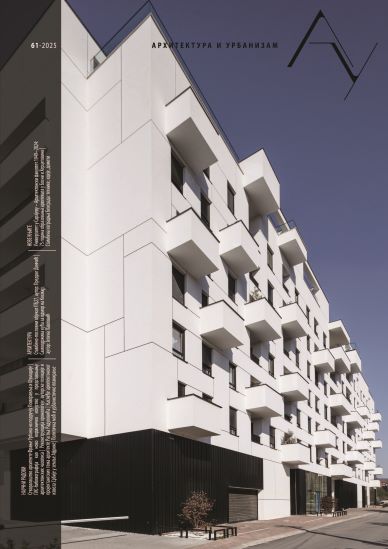
The building is located in a part of the city that has been characterized by a process of intensive urbanization over the past decade, where a semi-urban environment with traditional family housing is evolving into a modern multi-family and combined residential and business environment. The building consists of three parts, which together form a unique functional and design entity with a recognizable architectural identity. The integration of new construction into the established structure of the suburban settlement was considered on several architectural levels. The architectural and urban design solution stems from the irregular shape of the plot and its position at the intersection. By adopting the concept of the so-called "interrupted row", the building is integrated into the existing urban matrix, with the different architectural morphology of the neighboring streets. This approach enabled the discontinuity of the frontage towards the street with single-family homes and the formation of a continuous frontage towards the street with multi-family and commercial buildings. The residential floor is designed as a corridor structure. All apartments are clearly zoned, with dining and living rooms united into a single space, and spacious open areas. The apartments on the top floor also have access to large private roof terraces with swimming pools, summer kitchens and green areas, thus functionally connecting to the surrounding amenities. The basic volume of the building is made up of a monolithic white mass with emphasized dark lines and randomly arranged balconies, which gives the entire composition a dose of dynamism. The dissected crown of the building reinterprets the rhythm of full and empty, taken from a row of family houses on the opposite side of the street. The building responds in an original way to some typical spatial, organizational and aesthetic challenges of contemporary housing construction and represents another of the author's striking multi-family housing buildings in the city.
Copyright (c) 2025 Arhitektura i urbanizam

This work is licensed under a Creative Commons Attribution-ShareAlike 4.0 International License.